by nick | Mar 3, 2017 | Uncategorised
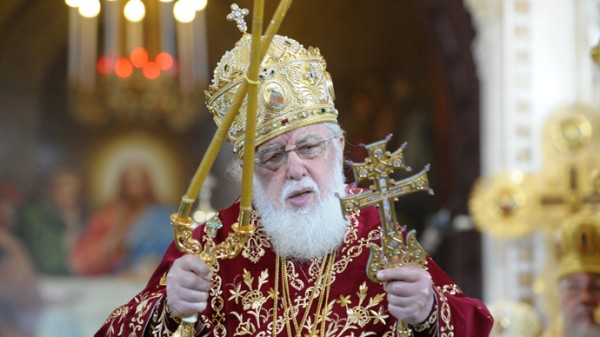
The secretary to Georgian Orthodox Patriarch Ilia II has resigned, and his security chief has reportedly been ousted, after a priest was arrested for allegedly plotting to poison the prelate.
Deacon Mikheil Botkoveli, the patriarch’s secretary, confirmed that he had resigned “because I am tired of everything that has been happening in the patriarchate recently.” The security chief, however, dismissed rumors of his removal, saying that he remained at his post.
On February 10 another Georgian Orthodox cleric, Father Georgy Mamaladze, was arrested in Tbilisi airport, reportedly having purchased cyanide with which he planned to kill the patriarch. The Georgian Orthodox Church has been caught up in a bitter dispute over the handling of financial assets, and Church officials say that the lives of both Patriarch Ilia and Father Mamaladze remain in danger.
by nick | Feb 1, 2017 | Uncategorised
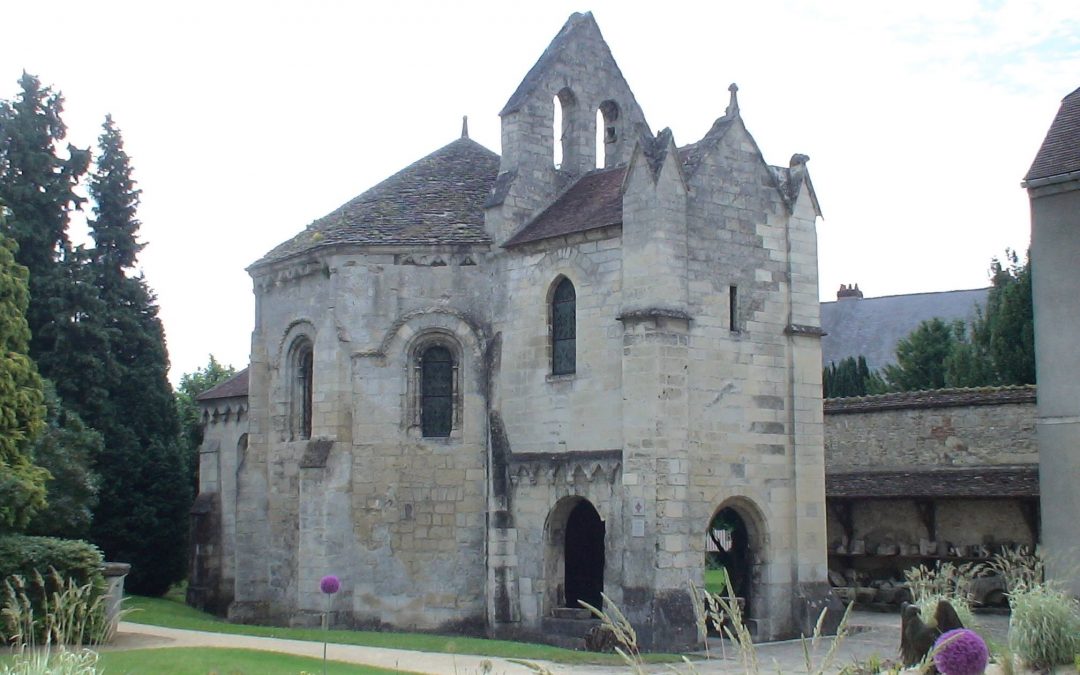
The Oriental Apostolic Church of Damcar is a Sacramental Christian Church, rooted in the Charism of Gnosis as described in the works of Origen, Clement of Alexandria, The Cappadocian Fathers, Dionysius the Areopagite, and reflected in the Christian Mysticism of The Desert Fathers.
Our primary focus is in the askesis (practice) of the Heyschast Tradition, treading the path that leads to Theosis.
We are an Oriental Rite Apostolic Church. The two most obvious reasons is that the Eastern Rite forms of work and worship still retain a theurgic quality lacking in the Western Rite and the Eastern Rite still teaches the doctrine of Theosis. Theosis is what Gnosticism is all about. It is defined by the early Greek Fathers as the “Divinization of Man” and the “Acquisition of the Holy Spirit.” John Chirban, in his “Developmental Stages in Eastern Orthodox Christianity” in Transformations of Consciousness, (Shambhala, 1986), states:
Theosis, deification, or the acquisition of the Holy Spirit, constitutes the aim of the Orthodox Christian life. The life of Jesus Christ serves as the model for Theosis. St. Athanasius says, like St. Iranaeus before him, “God became man so that man might become God.” It is said that Christ inaugurates the Kingdom of God on earth which is yet to be fulfilled, fully realized. Theosis, however, is not an eschatological potentiality or mere promise but, rather, it is the intense ascent of one who struggles and who is graced to find the Kingdom in this present life. Theosis is a par excellence example of theological and spiritual doctrine that is demonstrated in the alert, arduous spiritual askesis (exercise or development) of the Christian as he or she yearns to achieve union with God.
Our approach to Gnosticism does not dogmatically match the known “Gnostic” movements of the first centuries such as the Valentinian or Basilidean, but we do hold to the basic idea of Gnosis, as the Greek term gnostikoi, or “knower.” What we teach is that every one of us can experience an aspect of divinity, to the point where we ourselves can become divine. This experience is how one becomes a gnostikoi, or “one who knows,”- experientially, their place in the universe and how much they are a part of the grand scheme of things and the Ground of Being that underlies the entire universe.
We recognize two approaches to this experience, each incomplete without the other. The first approach is the “public” form or expression as given by the seven Sacraments, as well as the active practice of the principles of Christian Chivalry, second is the study and application of an esoteric or inner form of Christianity, the Hesychast tradition, thus our Eastern Rite approach.
l’Ordre du Temple – Our Larmenius Authority
l’Ordre du Temple, a lineal predecessor of the Venerable Order of the Companions and Knights of Saint Lalibela of Abyssinia, functioned as an autocephalous Templar Order, unaffiliated with any other Templar Orders and His Beatitude Tau Mikael III Basilides has been recognized in his capacity as Episcopal Fons Honorum, Embodiment of the Order, and possessor of the lines of filiation of l’ Ordre du Temple by Charter from His Eminence, the Most Rev. Father Iohannes III, Founding Primate of the Apostolic Johannite Church on March 26th, 2003.
The Charter was ratified and granted in perpetuity by His Eminence, The Most Rev. Father Iohannes IV, Patriarch of the Apostolic Johannite Church, on February 18th, 2006
This lineage is now bound with the diverse chivalric lineages contained within The Venerable Order of the Companions and Knights of Saint Lalibela of Abyssinia.
The Preservation of Ancient Christian Chivalry
The Venerable Order of the Companions and Knights of Saint Lalibela of Abyssinia, has been constituted as of December 21, 2016, the Feast day of Saint Juliana of Nicomedia, as an Alchemical, Apostolic, Johannine, Rosicrucian and Templar ecclesiastical and initiatic order of chivalry by His Beatitude, Tau Mikael III Basilides, the Metropolitan Catholicos of The Oriental Apostolic Church of Damcar, Sovereign Catholicate of the Inland Seas, functioning through the Office of the Maphryonos of Damcar.
by nick | Dec 31, 2016 | Uncategorised
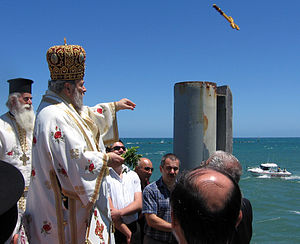
After the morning Divine Liturgy, clergy and members of St. John the Divine Greek Orthodox Church of Wheeling and the Greek Orthodox Church of the Life Giving Fount of Martins Ferry, will celebrate the “Blessing of the Waters” at noon at Heritage Port. The local Orthodox Christian community would like to invite the citizens of the greater Wheeling community to join in this event.
The following explanation of Theophany and the Blessing of the Waters was obtained and adapted from content made available by the Orthodox Church in America’s Series “Lives of the Saints” and the Publication “The Orthodox Faith” written by Protopresbyter Fr. Thomas Hopko. Both are available electronically at www.oca.org/orthodoxy, and Fr. Hopko’s series is also available for purchase at St. Vladimir’s Seminary Press (www.svspress.com).
According to the Orthodox Church in America’s Lives of the Saints series, “Theophany is the Feast which reveals the Most Holy Trinity to the world through the Baptism of the Lord (Mt.3:13-17; Mark 1:9-11; Luke 3:21-22). God the Father spoke from Heaven about the Son, the Son was baptized by Saint John the Forerunner, and the Holy Spirit descended upon the Son in the form of a dove. From ancient times this Feast was called the Day of Illumination and the Feast of Lights, since God is Light and has appeared to illumine ‘those who sat in darkness,’ and ‘in the region of the shadow of death’ (Mt.4:16), and to save the fallen race of mankind by grace.”
“In the ancient Church it was the custom to baptize catechumens at the Vespers of Theophany, so that Baptism also is revealed as the spiritual illumination of mankind. The origin of the Feast of Theophany goes back to Apostolic times, and it is mentioned in The Apostolic Constitutions (Book V:13). From the second century we have the testimony of Saint Clement of Alexandria concerning the celebration of the Baptism of the Lord, and the night vigil before this Feast…”
“…Saint John of Damascus said that the Lord was baptized, not because He Himself had need for cleansing, but to bury human sin by water, to fulfill the Law, to reveal the mystery of the Holy Trinity, and finally, to sanctify the nature of water and to offer us the form and example of Baptism.”
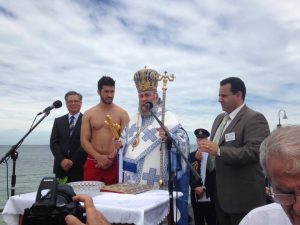
Regarding the Blessing of the Waters, the Rev. Thomas Hopko writes , “We know… that this ritual (of blessing the waters and sprinkling it over everyone and everything) was practiced by the People of God in the Old Testament, and that in the Christian Church it has a very special and important significance.”
Further Fr. Hopko states, “It is the faith of Christians that since the Son of God has taken human flesh and has been immersed in the streams of the Jordan, all matter is sanctified and made pure in Him, purged of its death-dealing qualities inherited from the devil and the wickedness of men. In the Lord’s (Theophany) all creation becomes good again, indeed ‘very good,’ the way that God Himself made it and proclaimed it to be in the beginning when ‘the Spirit of God was moving over the face of the waters’ (Gen 1.2) and when the ‘Breath of Life’ was breathing in man and in everything that God made (Gen 1.30; 2.7).”
Furthermore, “The world and everything in it is indeed ‘very good’ (Gen 1.31) and when it becomes polluted, corrupted and dead, God saves it once more by effecting the ‘new creation’ in Christ, his divine Son and our Lord by the grace of the Holy Spirit (Gal 6.15). This is what is celebrated on (Theophany), particularly in the Great Blessing of Water. The consecration of the waters on this feast places the entire world–through its prime element of watering the perspective of the cosmic creation, sanctification, and glorification of the Kingdom of God in Christ….It tells us that man and the world were indeed created and saved in order to be ‘filled with all the fullness of God’ (Eph 3.19), the ‘fullness of him who fills all in all’ (Eph 1.22). It tells us that Christ, in Who in ‘the whole fullness of deity dwells bodily,’ is and shall be truly ‘all, and in all’ (Col 2.9, 3.11). It tells us as well that the ‘new heavens and the new earth’ which God has promised through His prophets and apostles (Is 66.2; 2 Peter 3.13; Rev 21.1) are truly ‘with us’ already now in the mystery of Christ and His Church.”
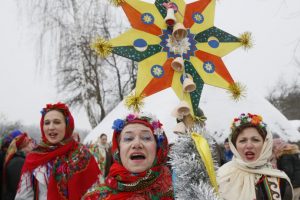
Thus, the sanctification and sprinkling of the Theophany water “is the expression of the most central fact of the Christian vision of man, his life and his world. It is the liturgical testimony that the vocation and destiny of creation is to be ‘filled with all the fullness of God’ (Eph 3.19).”

by nick | Dec 10, 2016 | Uncategorised
What is St Sarah?
- The Order is a Confraternity that has its roots in Chivalric and Hospitaller works
Why have I not heard much about St Sarah?
- The Order seeks to remain discreet and select and is thus invitational in nature and admission is granted to petitioners who have carried out significant works within the Orders field of operation
Is St Sarah associated with any country?
- The Order is not sponsored by or funded by any State and is self funded by its members and donors
What are St Sarah’s main objectives?
- The Order looks to embrace like-minded individuals throughout the world and thus help to promulgate the Orders objectives on a global basis
- The Order seeks to support those in need or oppressed with both practical and financial assistance
- The Order aims to spread knowledge throughout the world
- The Order aims to have a positive influence on humanity in everything it does
What does St Sarah’s motto mean
- The Orders motto is: ‘abscondita in campo visum’ which is in Latin and it translate to ‘Hidden in plain sight’
